
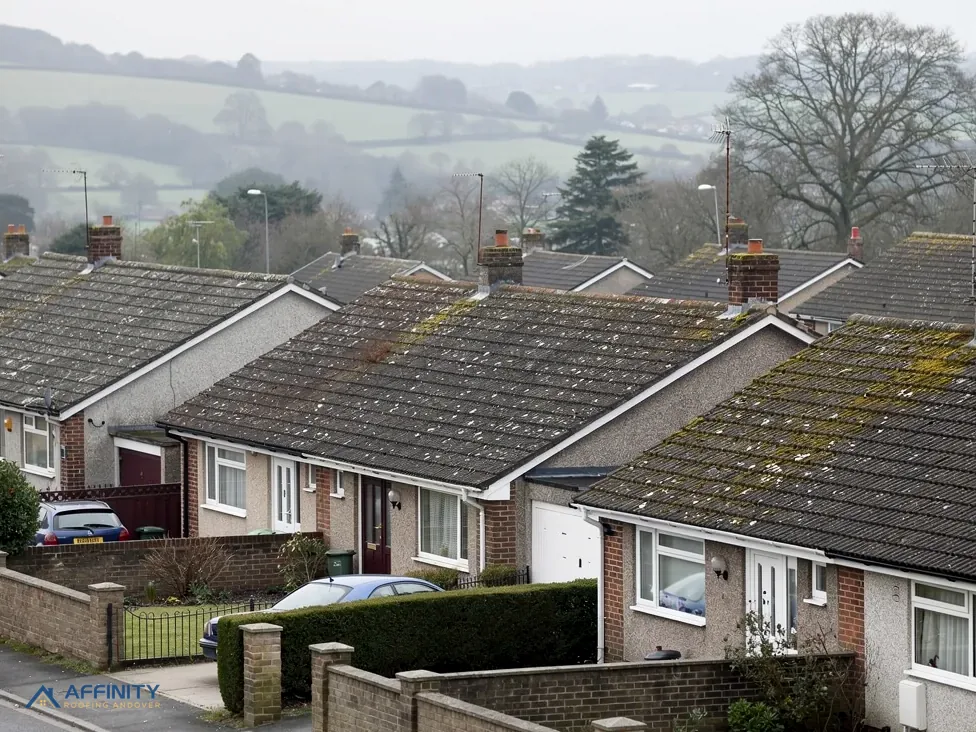
Roofers in Newbury
From Northbrook Street to Shaw Road: roofs in a listed market town
Newbury has two Grade I buildings, around 200 listed neighbours and four conservation areas. We inspect each roof in turn and explain what it needs in plain terms.
Newbury roofs from the centre outwards
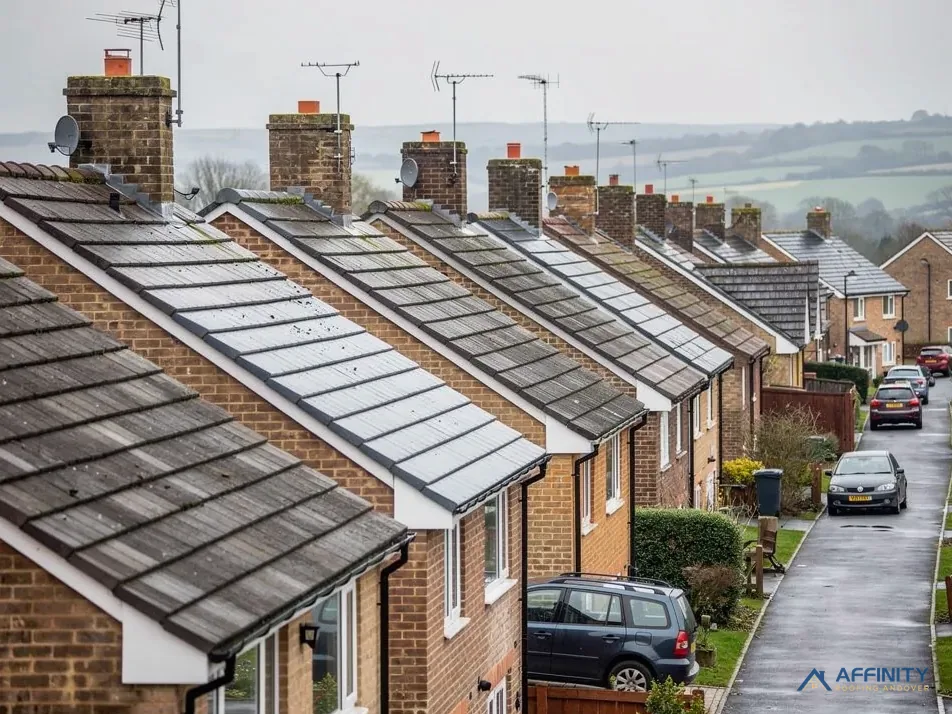
Streets round St Nicolas
Buildings near the Grade I Parish Church of St Nicolas, first listed on 29 September 1950.
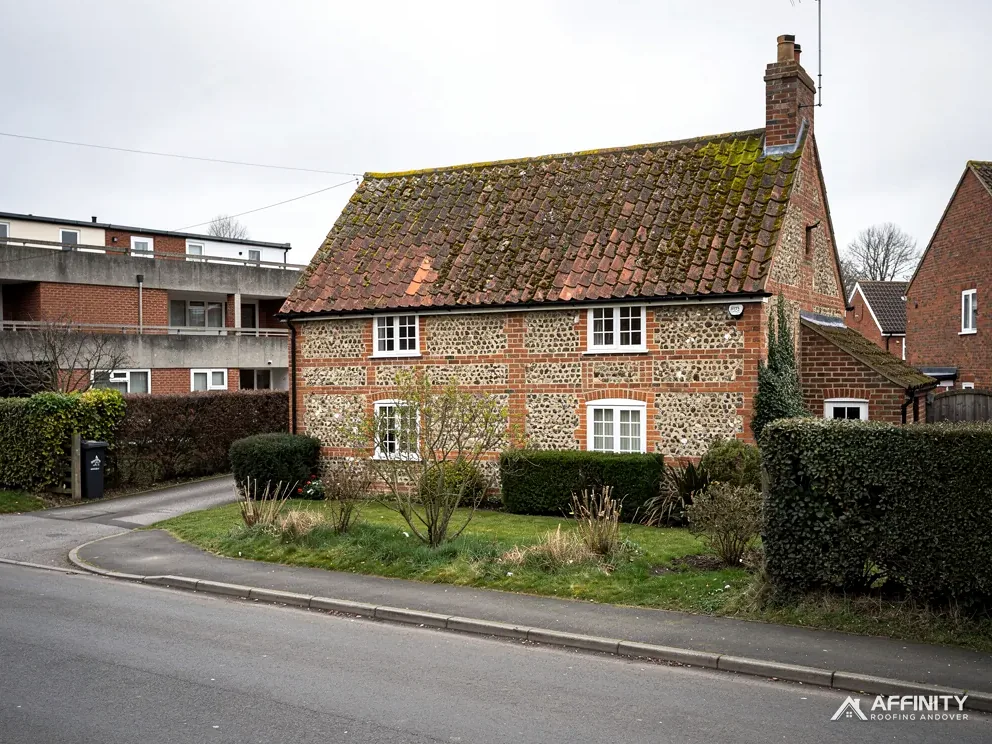
Northbrook Street frontages
Number 42 Northbrook Street is Grade II*, and neighbouring shop roofs sit within the town centre conservation area.
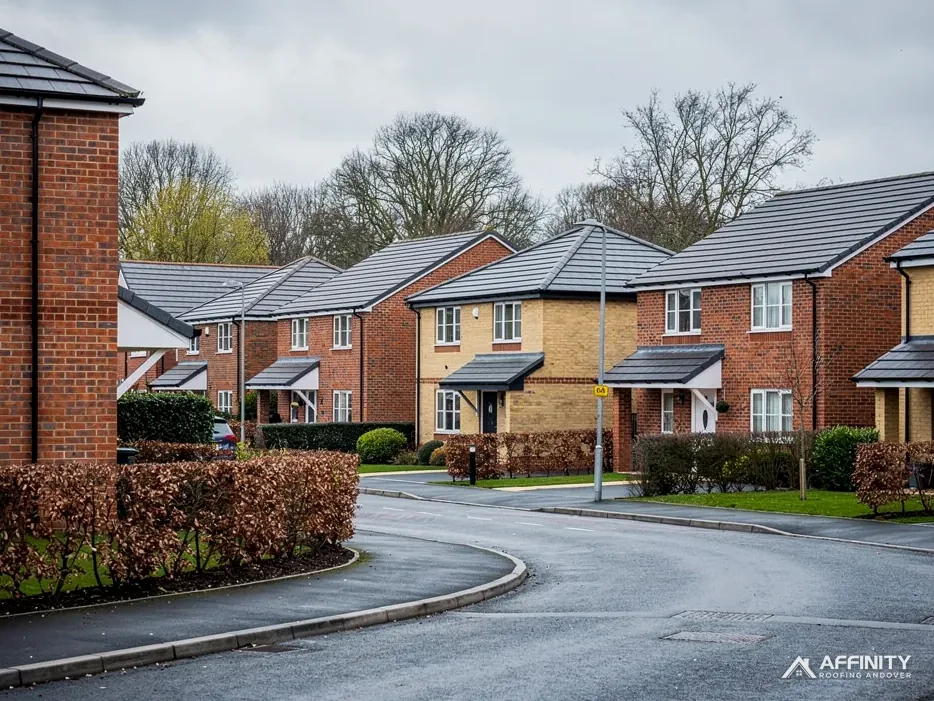
Shaw Road and Crescent
Houses in the Shaw Road and Crescent conservation area, where the council names an Article 4 area.
Newbury, with Speen, Shaw and Greenham beside it
Shaw lies to the north-east and Speen to the north-west. Greenham is south-east, Enborne west, Thatcham east and Cold Ash north-east.
- Distance
- 19 road miles north-east of Andover
- Planning
- West Berkshire Council
The Newbury roof report
Local editionNewbury, BerkshireA listed town and its four conservation areas
A market town built in layers: what each layer asks of a Newbury roof
Newbury is 19 road miles from Andover and had 33,790 usual residents at the 2021 Census. This report covers its listings, its four conservation areas, the Shaw Road direction and the scaffold rules.
Two Grade I landmarks among 200 listed buildings
Newbury parish had 33,790 usual residents at the 2021 Census, far larger than any village in this set, and its protected building stock is on the same scale. Historic England's list records 200 listed buildings within about 900 metres of the town point. Two are Grade I and share a first-listing date of 29 September 1950: the Parish Church of St Nicolas (list entry 1219556) and the Museum (1289770). Grade II* buildings include the Litten Chapel (1210610) and 42 Northbrook Street (1211030).
Density changes how a job is run. In a street where almost every neighbour is protected, a ladder, a skip or a tower has to be placed with care, and the owner next door is entitled to ask how the work will be carried out. If your own building is listed, any work affecting its character needs listed building consent before it begins. If it is not, the roof still has to be repaired with that neighbour in mind. Our guide to listed building roof repairs sets out the consent route.
St Nicolas is in use for worship by the Church of England, so works to the church are handled under the faculty system rather than listed building consent. A neighbour whose roof work comes close to the churchyard should ask the church before leaning a ladder or pole on its wall.
Buyers, sellers and landlords in a town this size ask for the same thing: a dated record of what the roof looks like, what has been done to it and by whom, filed where the next owner can find it. A set of numbered photographs with a short written note answers the questions a surveyor, a lender's valuer or a tenant is likely to ask, and it goes into the property file for good.
Town-centre roofs are often hidden. Parapet gutters, valleys between buildings, lead-lined flats behind a frontage and chimney stacks shared with the building next door cannot be seen from the street. Our survey therefore goes up as well as around: we reach the roof itself, photograph every slope, gutter and abutment, and record the lead, felt or membrane we find.
Inside the building we check the structure below, in the loft or the top-floor ceiling void, because water in a town roof often enters at a joint metres away from the stain it leaves.
The photographs come to you labelled, in the order of the repair, with a plain note on each, and a view on which faults can safely wait.
Four conservation areas and a Shaw Road direction
West Berkshire Council's boundaries put four conservation areas within about 0.75 km of the Newbury town point: Donnington Square, Newbury Town Centre, Shaw Road and Crescent, and Stroud Green. The council names the first three as the town's conservation areas. Inside any of them, how a roof looks from the public street is a planning matter for West Berkshire Council, so a change of material, colour or profile goes to its planning team before an order is placed.
West Berkshire has also published an Article 4 area for numbers 11 to 79 (odds) Shaw Road, Newbury. Its existence and location are on the record; its terms are for the council to explain, and guessing at them would be wrong. If your house is on Shaw Road, ask the council what the direction covers, and ask for the answer in writing. We can put the question and pass the reply on.
For Building Regulations, Newbury falls to Building Control Solutions (BCS), a service backed by two councils, West Berkshire and Wokingham. Owners who would rather use a private body can appoint a registered building control approver. Two proportions in the Planning Portal's guidance settle whether a re-roof needs sign-off: under 25 per cent of the building envelope and under 50 per cent of the roof, none is normally required.
Weight can override that. If a new covering comes out heavier by 15 per cent or more, Building Regulations approval is needed however small the job, and a structural check is the Portal's first step. A slate roof laid with concrete tiles is the standard case. In a town of mixed construction, we record what each roof is made of, so that the comparison is on paper before the order is placed.
Which of the four conservation areas a house belongs to is a question of the map. We check the council's boundary at the survey and record the area's name in the note, because any question to the planners should name the right area, and it saves you searching through the wrong one.
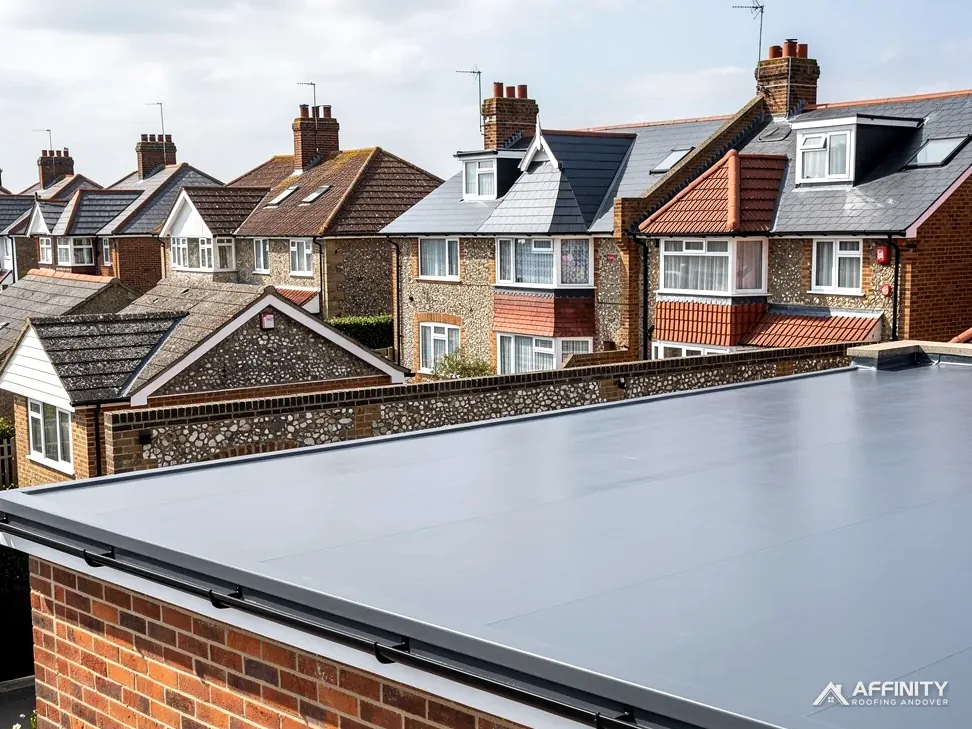
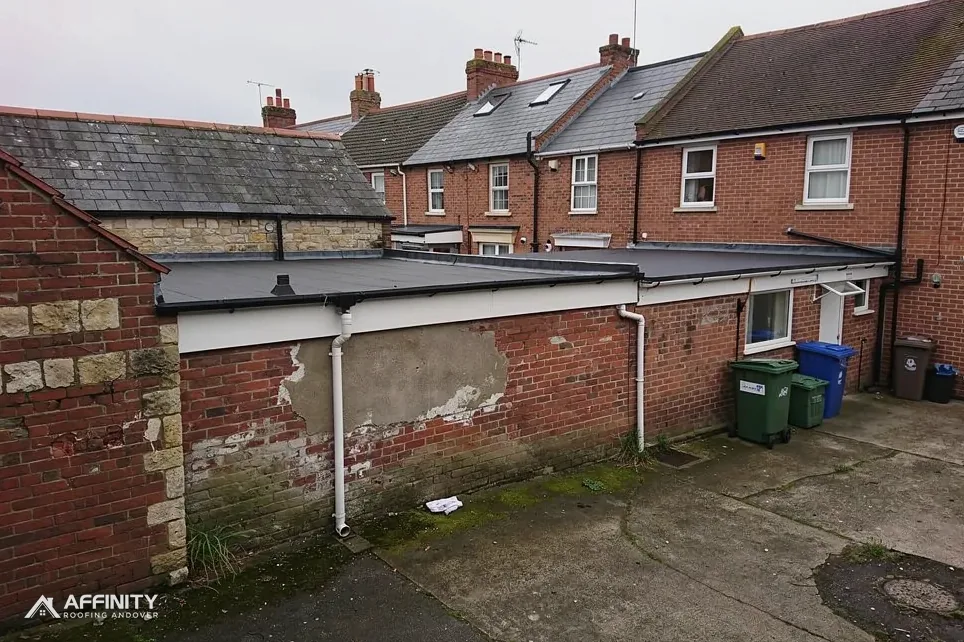
Flat roofs deserve a note, since a town has many. Water on a flat roof tends to fail the details first: outlets, edges, abutments against parapets. Fixing the faulty detail is often enough, and where it is not, the photographs show why the whole membrane has to go. A flat roof behind a parapet also needs its outlet kept clear, because water that cannot escape rises over the upstand.
Small repairs rarely approach any of these lines. The survey note names a line whenever a job does, and the person at the council we would ask.
“Newbury's roofs sit among 200 listed buildings and four conservation areas.”
Source: Historic England, National Heritage List for England; planning.data.gov.uk
Scaffold on busy streets and the weekly fee
In a town centre the scaffold is a public structure. It sits over pavements, near shop doors and on streets people use all day, and under section 169 of the Highways Act 1980 it needs a licence granted by the highway authority, which for Newbury is West Berkshire Council. Its page is blunt: the form has to be filed by the scaffolding contractor, never by the resident.
West Berkshire Council charges £125, plus £71 per week, and wants the application in 10 or more working days before erection. A weekly rate rewards efficiency, so the frame should stand only while work is under way. Materials are ordered and checked first, and the date for taking the frame down is fixed with the scaffolder before it goes up.
Hoarding is a separate matter. If the job needs a protective hoarding as well as the frame, that may need a licence of its own from West Berkshire Council, and we confirm the position before the dates are fixed.
Pedestrians matter most. The lowest platform is fenced, boards are secured, netting or fans catch debris, and the footway stays open or a safe diversion is agreed. For a shop or office, we plan around opening hours and keep the entrance clear, telling the occupier which days will be noisy.
Not every town roof needs the highway. A rear slope behind a yard, a roof reached across the owner's own flat roof or an inner courtyard may be worked from private ground. Land that is not public highway sits outside the licence altogether. The survey settles which of these situations your roof is in.
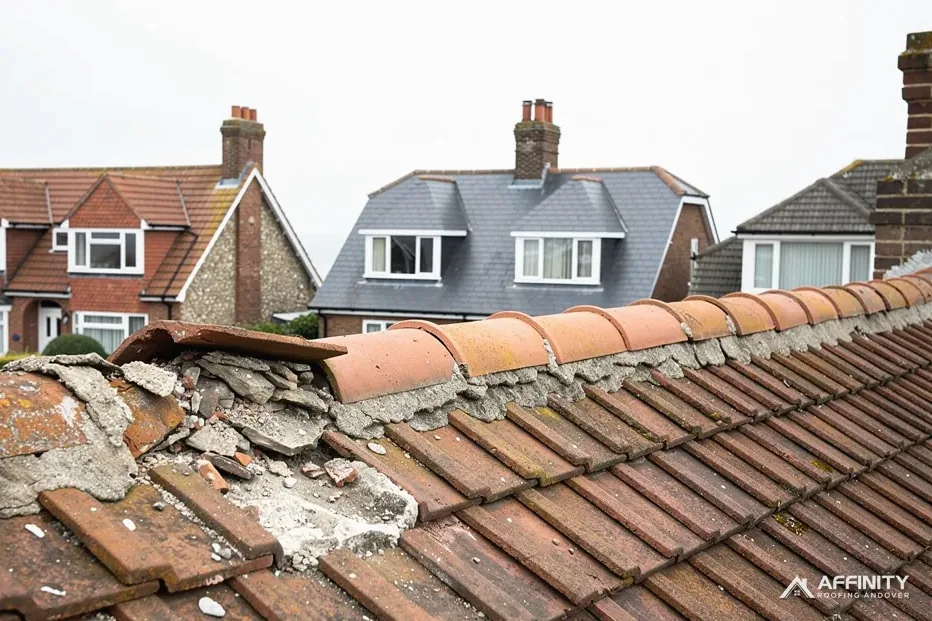
Newbury's roofs call on the full range of services. Roof repairs follow slipped tiles and failed flashings. Commercial roofing covers shops, offices and small units. Lead roofing deals with flashings, valleys and parapet gutters, the places where lead sheet is the traditional answer.
Town traffic complicates deliveries, so lorries are booked for quiet windows, loads are split where the street is narrow, and tiles are hoisted rather than carried through a shop. A skip has to stand somewhere legal, and the licence for that is another thing we check with the council before the date is set.
If rain stops work, the licence clock does not stop with it. The start date is chosen with days in hand, and any slope left open is covered before the crew leaves. Neighbouring businesses hear from us on the day the frame is booked, and again before it is struck.
Every job ends alike: the site cleared, the rubbish removed and your photographs on file.
Which service does your Newbury roof need?
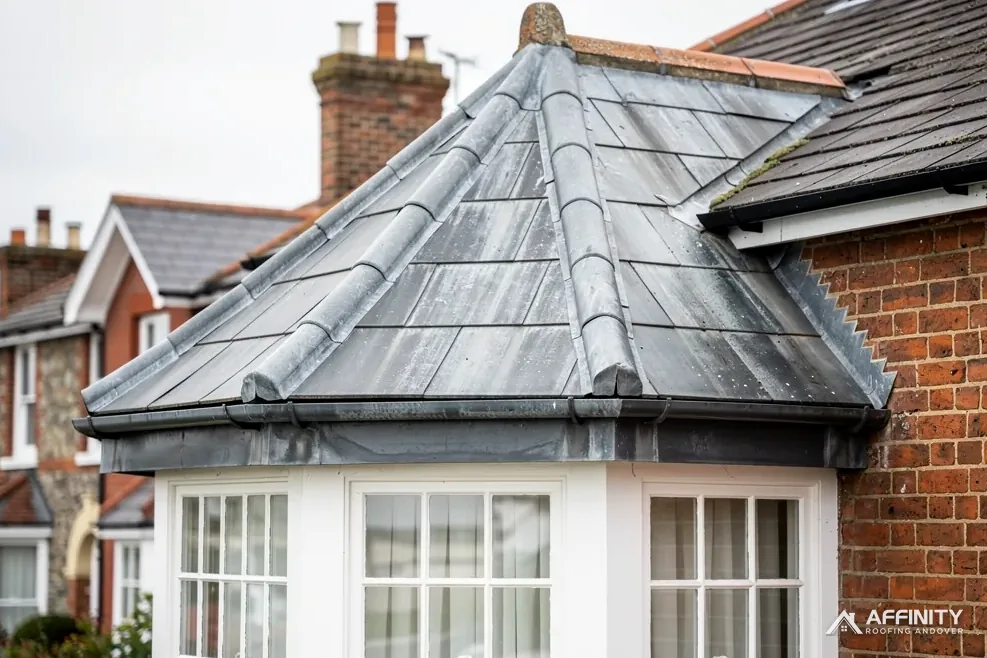
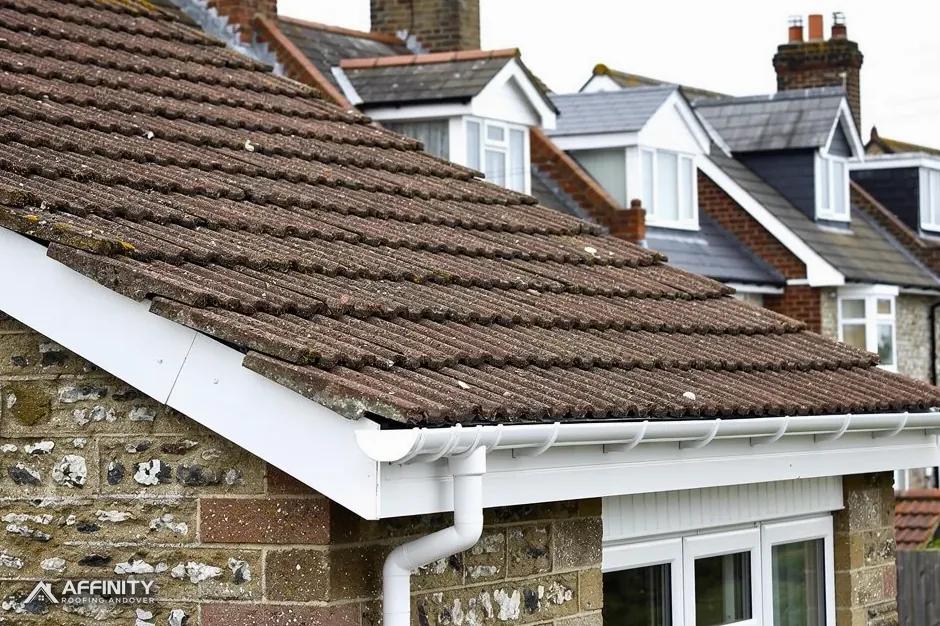
Newbury roofs: listings, the town centre and the weekly fee
Can I repair a Newbury shop roof on Northbrook Street without consent?
That depends on whether the building is listed. Number 42 Northbrook Street is Grade II*, and the street lies within the Newbury Town Centre conservation area, so the council has a say over its roofs' appearance. At the survey we search the National Heritage List under your address. If the building is listed, any work affecting its character needs listed building consent first.
What is the Shaw Road direction, and does it cover my roof?
West Berkshire Council's data records an Article 4 area for numbers 11 to 79 (odds) Shaw Road, Newbury. Its terms are for the council to explain. Ask whether the direction reaches your house and what it restricts, before ordering anything, and keep the written reply. We can send it on your behalf and pass on the answer.
How is a town-centre scaffold priced in Newbury?
West Berkshire Council charges £125, plus £71 per week, for a licence the scaffolding provider applies for 10 or more working days ahead. A weekly rate means the frame should stand only while work is under way. A frame kept wholly on your land needs no licence, so the plot comes first.
Does a flat roof in Newbury have different rules from a pitched one?
Building Regulations and the Planning Portal's tests apply to both kinds of roof. What differs is how a flat roof fails: at outlets, edges and abutments much sooner than in the open middle. We photograph those details and repair the failed one before recommending a full replacement, and we explain the choice with the pictures in front of you, so the decision is yours.
Newbury roofs: photographs first, price second
Give us the street and a photo. We inspect, sort the consents and put one written total on paper.
10-year workmanship guarantee, in writing.